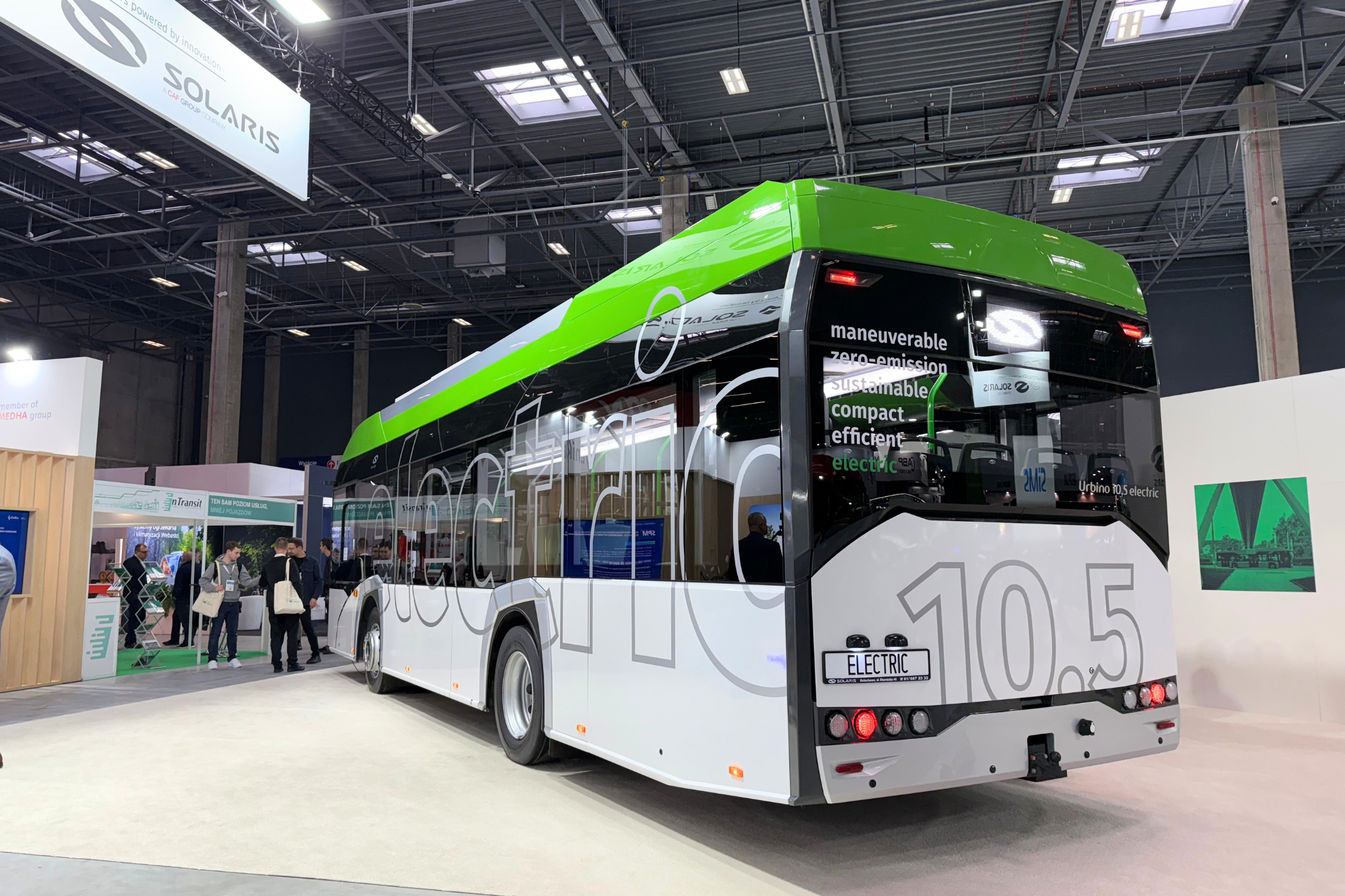
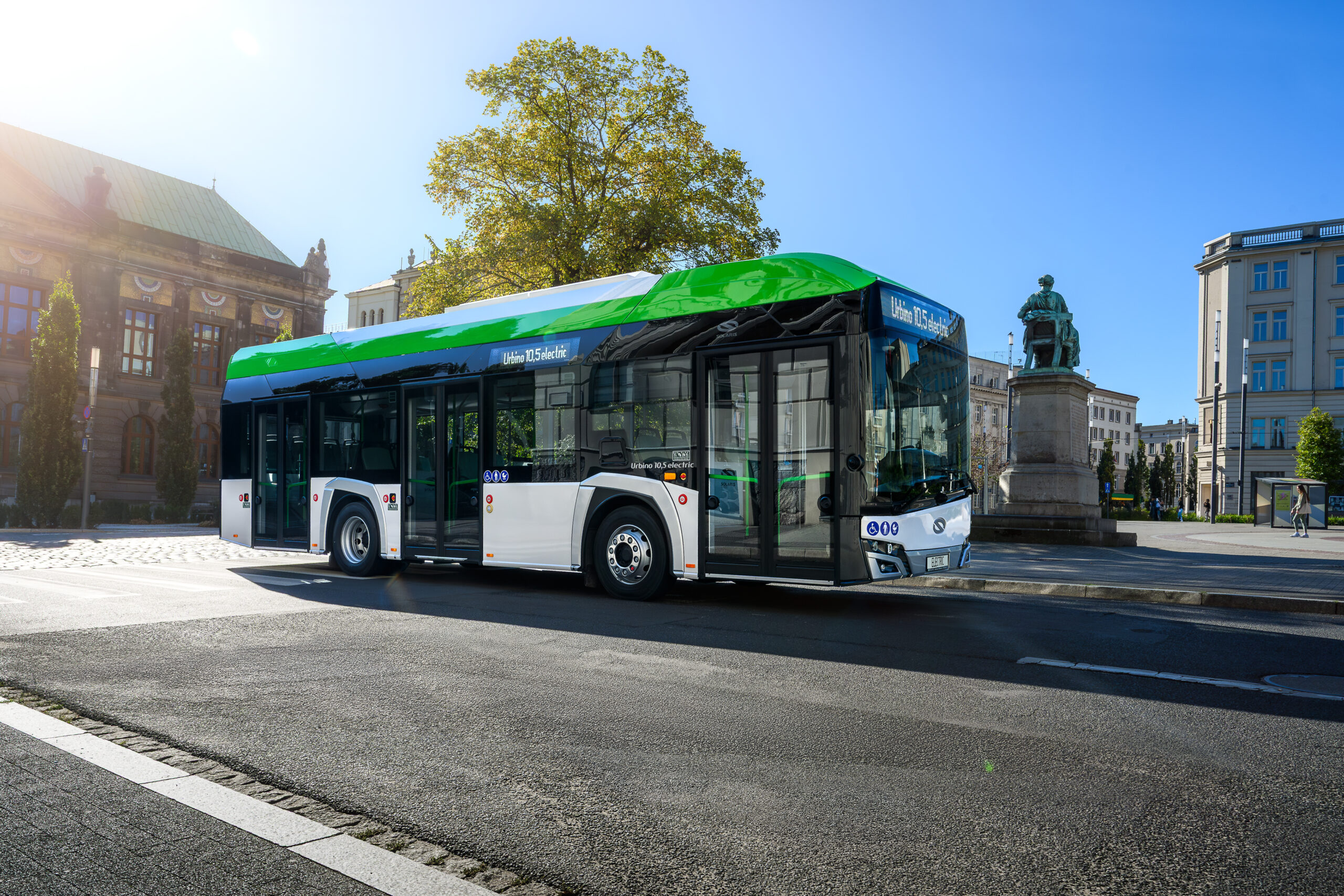
Lead photograph: Solaris Urbino 10.5 electric on the TRANSEXPO 2026 stand. Photo: Solaris Bus & Coach.
Welcome to the European Bus Glass Journal’s prototype weekly briefing. Its purpose is to filter the crowded passenger-transport news cycle through a narrower question: which developments matter to the identification, supply and maintenance of bus and coach glass?
For the week ending 16 October 2026, the most tangible new model story comes from Solaris at TRANSEXPO in Kielce. The events calendar is also taking shape for the following year. Below, we connect confirmed announcements with a few practical questions fleet operators and glass service providers should already be asking. This is a retrospective draft prepared after the events, not evidence that the Journal published a live briefing during the week.
Solaris puts new-generation models in front of operators
Solaris attended TRANSEXPO 2026 from 14 to 16 October and presented the Urbino 10.5 electric in Poland alongside the new-generation Urbino 12 hydrogen. The manufacturer linked the exhibition to its 30th anniversary. For fleet buyers, the vehicles represent additional options within a growing zero-emission portfolio.
For glass procurement, the takeaway is different: a product launch should trigger a review of component records. A new or updated body generation is an opportunity to capture the exact windscreen configuration, passenger-window layout and applicable parts identifiers before the first damage occurs. None of those details can safely be filled by copying entries from an older model based on a similar name.
An award highlights the importance of body evolution
Solaris also reported on 15 October that the Urbino 10.5 electric received a Kielce trade-fair medal in the bus category. The manufacturer’s announcement pointed to the vehicle’s compact proportions, passenger capacity and towerless drive arrangement as features recognised by the jury.
Those are important product-design claims, but they should not be confused with glass specifications. For maintenance teams, vehicle development should prompt careful generation tagging in the asset database. A catalogue that groups every ten-metre Urbino under one heading without checking the exact variant can generate incorrect quotations.
Busworld Europe 2027 moves into view
On 15 October, Busworld’s news service looked ahead to the next Brussels exhibition, scheduled for 16–21 October 2027. The event brings together vehicle manufacturers, component suppliers and fleet operators. While the exhibition is still a year away, advance planning matters for specialist aftermarket companies.
Such events offer chances to request technical catalogues, compare new glass products and speak directly with suppliers about upcoming body generations. One practical approach is to maintain an exhibition question list in advance: which glass types will have verified references, who handles warranty issues and what documentation is supplied to replacement partners?
The longer-term context: smart glass and regulatory traceability
Beyond this week’s headlines, two background developments deserve monitoring. Busworld’s 2025 innovation programme included switchable glazing concepts for bus interiors. Separately, UNECE’s GRSG working programme in 2026 includes safety-glazing documentation relating to UN Regulation No. 43. These are background reference points, not new announcements made during 12–16 October.
Together, they remind the industry that glass is increasingly a functional and regulated component. As switchable systems develop, installers may need additional product-specific records. As regulatory proposals proceed through formal stages, suppliers should track actual adopted requirements rather than treating a working paper as law.
The practical checklist for this week
For a fleet operator, the first action is to check whether any new vehicles entering the fleet have been recorded with the correct body generation and VIN. Second, confirm that the workshop’s glass request form captures the precise location and features of a damaged pane. Third, ask the replacement partner how it validates a recently introduced part number.
For glazing distributors, review forthcoming model introductions, note gaps in verified references and contact manufacturers for technical documentation where appropriate. A well-maintained cross-reference catalogue can shorten response times more reliably than a long list of vague product titles.
What we will follow next
Future briefings will prioritise documented developments in glazing technology, supplier networks, safety requirements and new vehicle construction. We will also revisit older innovations when fresh evidence emerges about production installations or maintenance performance.
Our editorial standard is to report only what sources support. We will distinguish company announcements from independent verification, and operational interpretation from technical specifications. That makes a weekly briefing more useful to professionals than an indiscriminate stream of vehicle launch announcements.
Sources and further reading
- Solaris Bus & Coach — TRANSEXPO 2026 presentation (14 October 2026)
- Solaris Bus & Coach — Urbino 10.5 electric wins TRANSEXPO medal (15 October 2026)
- Busworld Europe — News overview, one year to Busworld Europe 2027 (15 October 2026)
- Busworld Europe — 24 Innovations (2025 background)
- UNECE — GRSG 132nd session (2026 background)
Fleet reference: Keep the windscreen identification checklist with your vehicle records.
Editorial note: this briefing covers the week ending 16 October 2026. Event dates are distinguished from the article publication date.