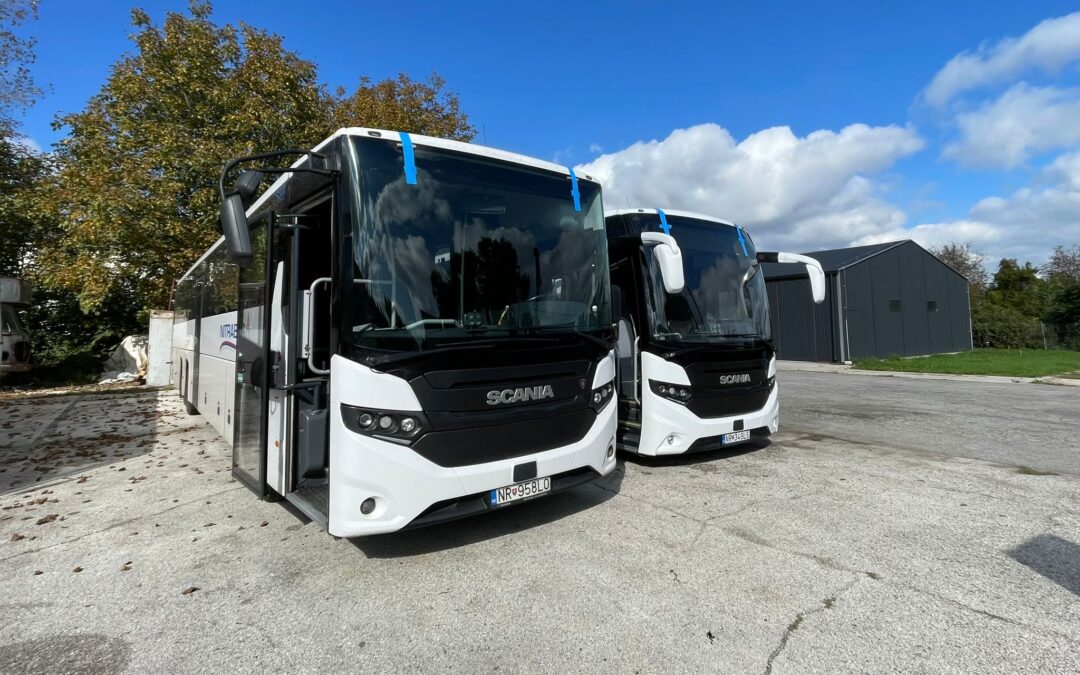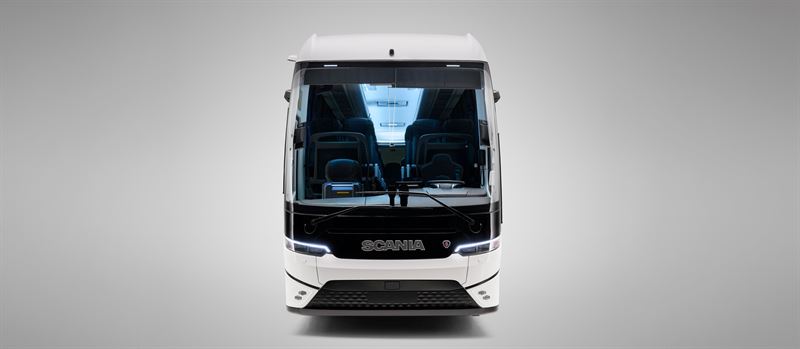
Photo: Scania Group, official press material, 7 October 2026. The photograph shows the new Touring generation; it is not a dimensional reference.
A small change in body design can create a large problem at the parts counter. Scania’s new Touring is a useful example: a documented change around the driver’s window is a reason to verify the exact vehicle and pane before ordering. The practical task is to connect the new generation to reliable parts records, rather than assume that the model name guarantees a fit.
What Scania has confirmed
The manufacturer’s launch announcement identifies changes to the front door and side window, with the B-pillar moved 90 mm rearwards to improve the driver’s view. It also describes digital rear-view mirrors and a redesigned exterior.
Those are confirmed vehicle-design details. The announcement does not provide glass part numbers, pane dimensions or a compatibility table. A 90 mm pillar movement must not be treated as a 90 mm change in any particular pane.
What to check before ordering glass
For a fleet operating more than one Touring generation, use the vehicle record as the starting point. A model description on an invoice is not enough to distinguish every glazing configuration.
- Identify the vehicle: record the VIN, registration, fleet number and body generation.
- Identify the position: distinguish the windscreen, driver window, door glass and adjacent panes; record the side and orientation.
- Photograph the opening: obtain a wide vehicle view and a clear view of the entire affected pane, including its surroundings.
- Record the specification: note visible markings, tint, heating and fitted equipment. Separate observed details from an assumed part reference.
- Confirm the match: ask the supplier to state the evidence supporting the proposed part, using manufacturer documentation where necessary.
Our bus windscreen identification checklist explains how to assemble a useful enquiry before dispatching a replacement.
Plan the replacement around the actual vehicle
Correct identification is only the first step. Check access to the vehicle, handling arrangements and the installation instructions for its glazing system. If the pane is bonded, the release of the vehicle back into service must follow the applicable vehicle and adhesive documentation.
Digital mirrors or other driver-assistance equipment do not, on their own, prove that a particular camera looks through a specific pane or that a particular calibration procedure applies. Establish the installed equipment and follow its service instructions.
What fleet teams should record as deliveries arrive
Build the glazing record during vehicle acceptance, before the first breakage. Keep verified part references, photographs, equipment details and the source of the identification together. If a reference has not yet been confirmed, label it accordingly so it is not reused as a verified match.
The operational takeaway: use the new Touring generation as a separate identification checkpoint. The public design announcement tells the workshop where to pay attention; vehicle-specific evidence determines what to order.
Sources
- Scania Group: new-generation Touring launch announcement, 7 October 2026.
- Scania Group: official front-view press photograph.
Updated 18 October 2026: condensed for clarity and supplemented with the manufacturer’s press photograph. The original publication date is retained. Ordering and workshop recommendations are editorial guidance, not verified specifications for individual glass parts.