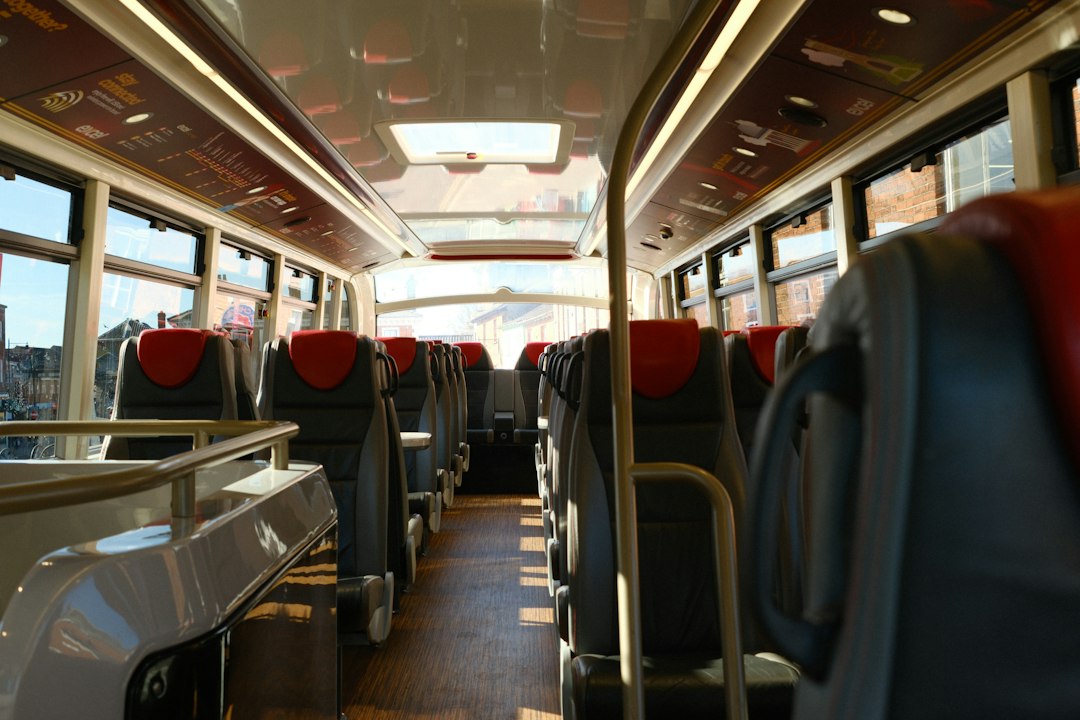
Lead photograph: bus interior by Riley Brockett / Unsplash. Illustrative image; it does not show an Amplisky installation.
A bus window has traditionally had one job: provide a clear, safe view while keeping the weather outside. Modern glazing can also influence privacy, visual comfort and the atmosphere inside a vehicle. Switchable glass makes that shift tangible, because its optical appearance changes in response to an electrical command.
At Busworld Europe 2025, Saint-Gobain Sekurit Transport featured Amplisky OMBRA/PERLA among the innovations presented to visitors. The organiser described a glazing solution based on polymer-dispersed liquid crystal technology, commonly abbreviated to PDLC, which can move between transparent and opaque appearances on demand. For fleets, the headline is not simply the visual effect: it is the prospect of glass becoming a serviceable electronic component.
What the technology actually does
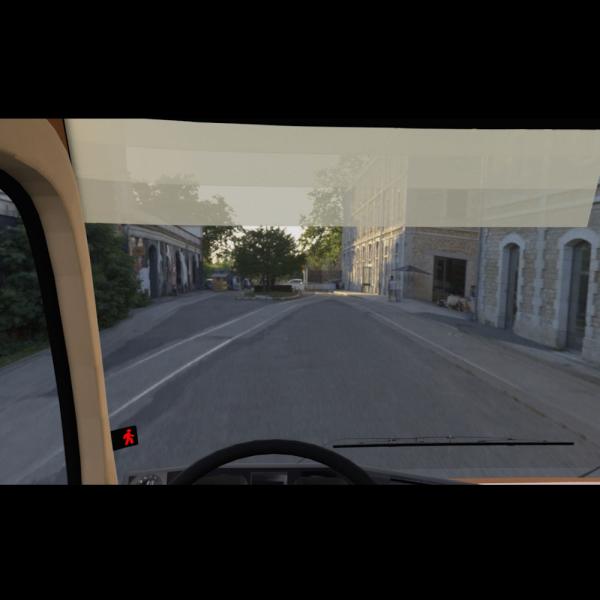
PDLC systems use liquid crystals distributed in a polymer layer. Their arrangement affects how light passes through and scatters, creating a controllable difference in appearance. Busworld listed roof sections, partitions and a shaded windscreen band as possible applications of Amplisky, and noted that the system can be divided into segments. The trade-show description identified Pearl and Dark Grey variants.
These are stated capabilities of the exhibited product, not evidence that every bus operator can order a universally approved switchable windscreen. Detailed certification, installation boundaries and operating conditions depend on the application and the manufacturer.
Why operators might be interested
Passenger comfort is a plausible first application. A partition may need privacy only at particular times, while roof glazing can be attractive when light is welcome but less desirable in strong sun. A controllable shading band might offer a different experience from a permanently tinted area, subject to the applicable safety rules and approved location.
There may also be opportunities in premium coaches and customised vehicles, where operators are willing to differentiate their interior. None of this means the system automatically saves energy: the actual impact on air conditioning, visibility and energy consumption must be demonstrated in vehicle-specific testing.
A new maintenance question: electrical and glass systems together
Conventional glass identification focuses on shape, dimensions, tint, heating and installed equipment. Switchable glass adds potential electrical connections, control units and layered functional materials to that record. A replacement unit that fits physically may still be unsuitable if its electrical characteristics or approved performance are different.
For maintenance teams, useful documentation would include part identifiers, wiring interfaces, supplier operating instructions and the safe isolation procedure. It would also be important to know whether a failed function can be diagnosed separately from physical glass damage. These are questions that prospective buyers should ask, not a claim that a specific Amplisky installation supports field repair.
Where regulation enters the discussion
Bus glazing is safety-critical. Any product placed in a regulated viewing area must satisfy the applicable vehicle requirements, and modifications after approval require particular care. A technology demonstration at a trade fair cannot replace confirmation of a vehicle-specific approved design.
Fleet managers should therefore treat installation claims and marketing illustrations as a starting point, then seek homologation documentation, approved operating states and product handling instructions. A visually interesting concept has little practical value if its safe use cannot be verified in the intended vehicle.
What to watch next
The key indicators of market adoption will be production-vehicle applications, documented certification, predictable supply, replacement unit pricing and service support across borders. As more functions migrate into glazing, operators may need closer cooperation between glass installers, electrical technicians and the vehicle manufacturer.
Our assessment is that switchable glazing is worth tracking now, but should be evaluated as a complete system rather than as a film that can be added casually to any window. The long-term impact on the aftermarket will become clearer once real installation and repair documentation is widely available.
Sources
- Busworld Europe — 24 Innovations at Busworld Europe 2025, Amplisky OMBRA/PERLA (2025)
- Busworld Europe — 2025 exhibition review (15 October 2025)
Related reading: UN Regulation No. 43: the distinction between safety-glazing proposals and requirements.
Editorial note: this retrospective analysis examines technology presented at Busworld Europe 2025.