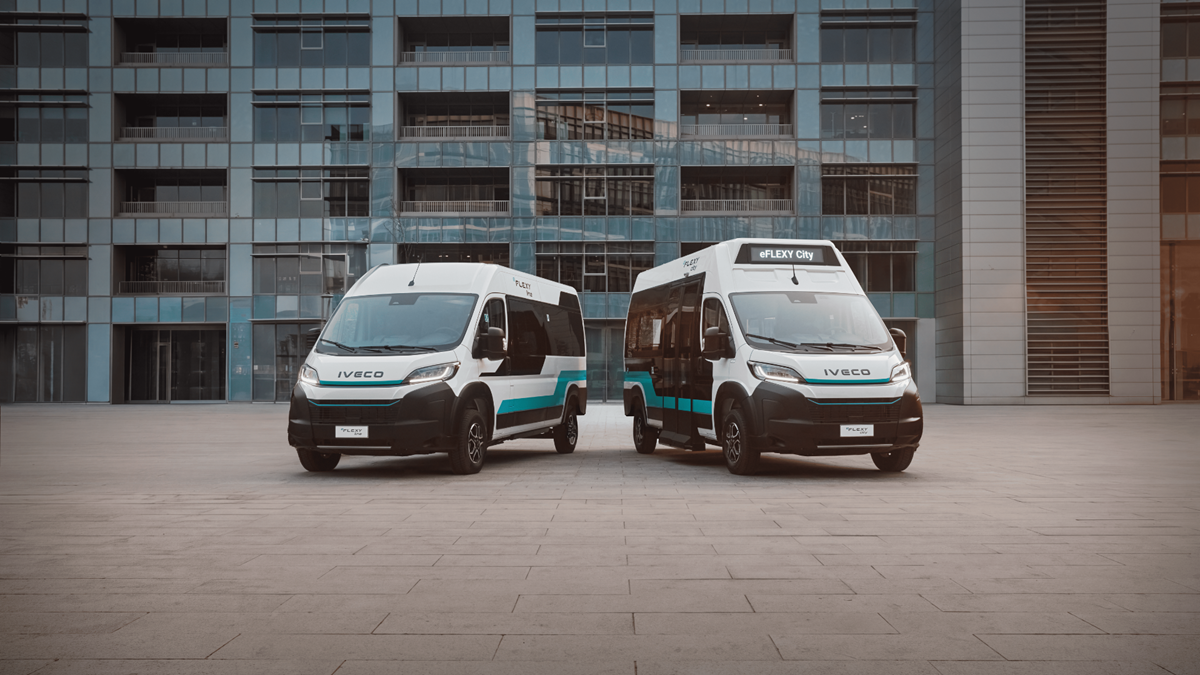
Lead image: eFLEXY Line and City. Image: IVECO BUS.
The launch of a new compact electric minibus does not only interest procurement and charging teams. It introduces another vehicle platform that workshops and spare-part providers must recognise. In a sector where a wrong pane can immobilise a working vehicle, identifying body variants before they become common on the road is valuable preparation.
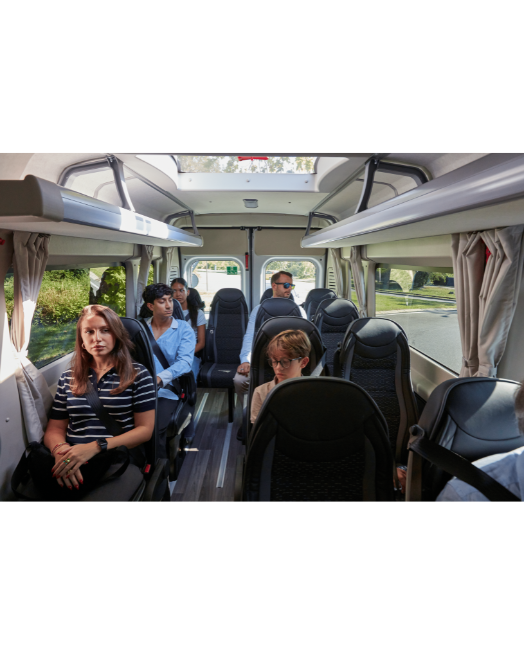
On 22 September 2026, IVECO BUS announced its eFLEXY Line and eFLEXY City electric minibus family during FIAA in Madrid. The manufacturer positioned the models within the M2 category and described a common platform of roughly six metres. It expressly highlighted large side windows and a glazed tailgate for the Line variant. Those details give glazing specialists a concrete reason to follow the launch.
What IVECO confirmed
The eFLEXY Line was introduced as a vehicle for shuttle, local-line and interurban work, while eFLEXY City is aimed at compact urban transport. IVECO said the Line layout can accommodate up to 13 passengers plus the driver, and that the City version can carry up to 17 passengers depending on configuration.
The official release also described the electric driveline and an integrated support ecosystem. These features may be important to an operator’s purchasing decision, but they do not give a glass supplier the detailed drawings or reference numbers required to quote replacement panes. That remains a separate task.
The relevance of the side windows
Passenger glazing contributes strongly to visibility, interior brightness and the vehicle’s external appearance. The manufacturer described a glazed tailgate on eFLEXY Line, which potentially makes the rear panel a distinct component with its own geometry and fixing approach. The door layout, body glazing and passenger-access equipment should be identified by variant rather than assumed identical across City and Line.
None of the official announcement proves that the two versions share or do not share a particular window. We would therefore treat any interchangeability assertion as unverified until the relevant vehicle and manufacturer parts data are available.
Why new models challenge an established catalogue
In the early life of a new platform, independent aftermarket catalogues are often incomplete. A generic listing such as ‘IVECO electric minibus side glass’ may not indicate the vehicle generation, a left- or right-hand component, a vent opening or the exact tint. When several markets and body configurations are involved, the probability of misidentification increases.
A better workflow starts with a unique vehicle record, VIN and clear images of the exact opening. Vehicle-specific documentation can then be matched to supplier stock records. For a mobile replacement operation, preventing a wrong delivery is as important as securing a rapid dispatch.
Plan for first-fleet support
Operators expecting deliveries should consider making a glazing inventory part of vehicle handover. This does not require expensive specialist equipment at the outset. Registration, model designation, body type, VIN, a consistent set of photographs and verified part references are useful first steps.
The information can be extended as real servicing experience accumulates. A documented replacement, including the source of the part and relevant product marking, becomes a reference for the next repair. That is particularly valuable for small fleets, where the first broken pane on a newly introduced model can otherwise become a lengthy investigation.
What happens next
IVECO said first deliveries of the eFLEXY range were scheduled for the first quarter of 2027. For the glazing market, the immediate milestone is therefore not an assumed supply problem but the availability of reliable service and spare-part information as deliveries approach.
Our editorial assessment is that compact zero-emission platforms deserve the same systematic glass identification as full-size buses. A smaller vehicle does not necessarily mean a simpler replacement job, especially where doors, tailgates and accessibility equipment differ between versions.
Sources
- IVECO BUS — eFLEXY Line and eFLEXY City announcement (22 September 2026)
- IVECO BUS — FIAA 2026 press overview (22 September 2026)
Related practical guide: How to identify the right bus windscreen and record the glazing configuration.
Editorial note: this retrospective analysis examines the announcement of 22 September 2026.